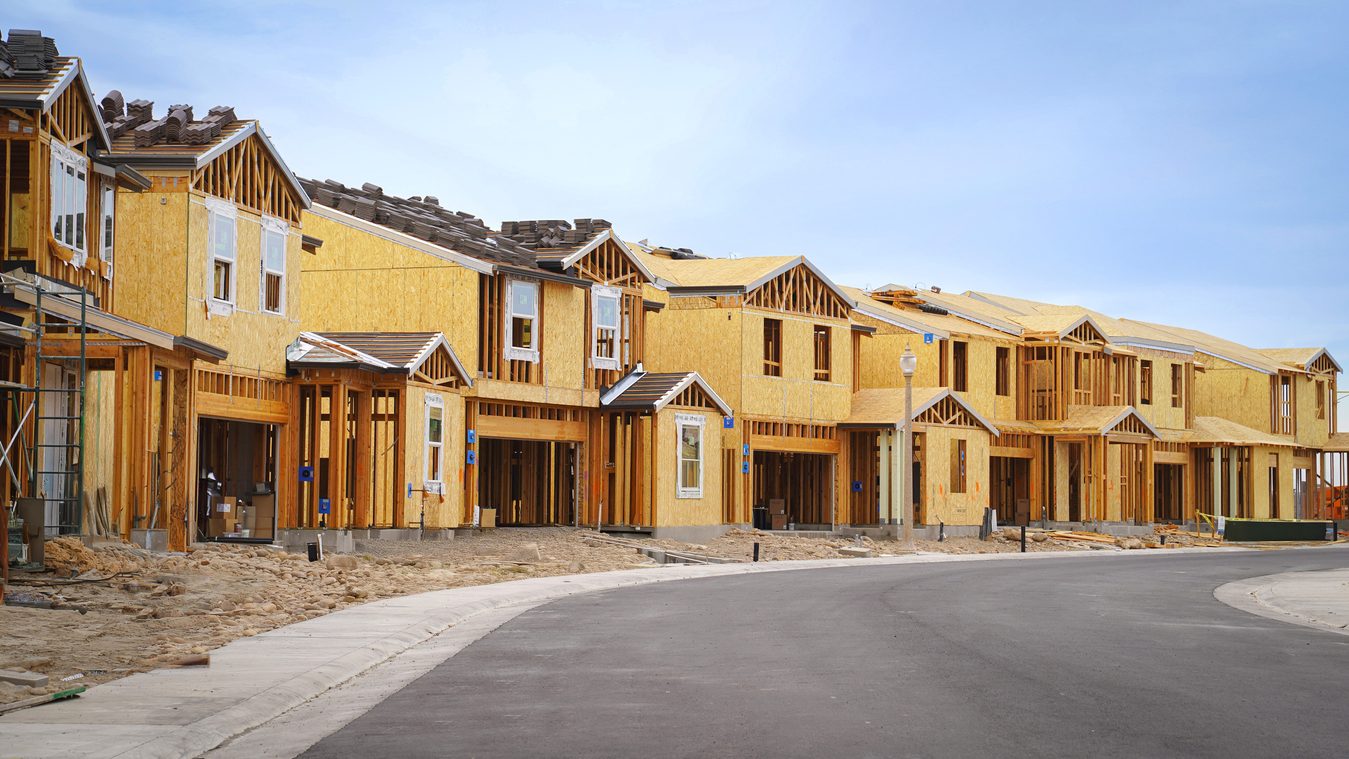
In recent years, U.S. housing starts have topped 1.3 million units annually, according to the Census Bureau's New Residential Construction data. Here's the part most people outside the industry never hear: every one of those units needs an energy model for a building permit before anyone breaks ground. Single-family, multifamily, spec home, custom build: the property type doesn't matter. No energy model, no permit. No permit, no construction. No construction, no revenue.
That's not a niche compliance step buried in a specialty market. That's a mandatory gate applied to nearly every new residential building in the country, every year, without exception.
The Permit Nobody Talks About Until It Stalls Your Project
Ask a developer what stands between a signed deal and a construction start, and you'll hear about entitlements, financing, and site work. Almost nobody mentions the energy model, until it's the thing holding up the permit.
An energy model, in this context, is a report showing that a proposed building's design meets the energy code that applies to its jurisdiction: whether that's Title 24 in California, the IECC as adopted (and often modified) by a given state or county, or a local above-code stretch code layered on top. The model simulates the building's envelope, mechanical systems, lighting, and equipment, and compares projected energy use against a code baseline. If it passes, the building department gets its compliance documentation. If it doesn't, the design goes back for revisions before a permit is even reviewed.
This isn't a formality tacked onto the end of design. It's a required deliverable that has to exist, correctly, before construction can legally start. And because it depends on the specific code edition adopted by the specific jurisdiction the project sits in, there's no universal template. A model built for a project in one county doesn't transfer to a project one county over if that county is on a different code cycle or has adopted different amendments.
For a developer with one project in one place, that's an annoyance. For a developer building a pipeline of projects across multiple cities, counties, or states, it's a recurring bottleneck that shows up on every single deal.
Why the Bottleneck Is Getting Worse, Not Better
The traditional way to handle this is to hire an energy consultant, hand over drawings, and wait. Depending on the consultant's backlog and the complexity of the project, that wait can run from a few weeks to a few months, time that shows up directly on the project schedule, sitting between design completion and permit submission.
Three trends are compounding the problem:
- Code cycles keep tightening. Energy codes are revised on a regular cadence, and each cycle generally pushes performance requirements higher. A model built to satisfy a 2021 code edition may not satisfy the 2024 edition adopted by that same jurisdiction two years later.
- Above-code programs are spreading. More jurisdictions and more capital sources (institutional investors, ESG-focused lenders, green bond programs) are asking for performance beyond minimum code. That means more scenarios to model, not fewer, even on projects that would have cleared a basic code check a few years ago.
- Portfolios are scaling faster than the consultant pool. The consultant-driven model was built for an era when energy modeling was an occasional, one-off event per project. It was never designed to serve a developer running dozens of units through permitting in a single year across a scattered set of jurisdictions. When a developer scales, the number of models required scales right alongside it, but the number of qualified consultants able to turn them around quickly does not.
The result is a market where volume goes up, complexity goes up, and turnaround time barely moves. That's the definition of a structural bottleneck, not a temporary one.
How Buildwiser Removes the Bottleneck Instead of Just Managing It
Buildwiser AI was built specifically for this scale problem. Instead of a per-project consulting engagement that has to be re-scoped, re-priced, and re-queued every time, Buildwiser runs as a SaaS platform, meaning the cost structure scales with your pipeline instead of working against it.
The platform generates code-compliant energy models in minutes rather than weeks, across any building type and any U.S. jurisdiction, because the underlying code logic for Title 24, IECC editions, and ASHRAE 90.1 is built into the system rather than re-derived by hand on every job. A model for a project in Denver and a model for a project in San Diego run through the same platform, correctly applying whichever code edition and local amendments actually govern each site.
It doesn't stop at "does this pass." Buildwiser's AI also identifies the lowest-cost design path that still clears the applicable code, so you're not over-engineering a spec to be safe: you're hitting the compliance bar as efficiently as your budget allows. And because the platform learns from your project history, each model you run makes the next one faster and more precisely tailored to how your team actually builds.
For a developer running one project a year, that's a convenience. For a developer running a real pipeline against 1.3 million housing starts' worth of annual market demand, that's the difference between energy modeling being a bottleneck and energy modeling being a non-issue.
Zoom out and the size of the problem gets clearer. Based on Buildwiser's own analysis of national permitting volume, mandatory energy compliance work across new U.S. residential construction represents something on the order of a $6.3 billion addressable market, every year, on a recurring basis, because every year brings another 1.3 million units that need the same requirement cleared. That's not a market defined by occasional, one-off projects. It behaves like infrastructure: a fixed, mandatory cost of doing business that shows up on every deal, whether the developer is closing one project this year or fifty.
Frequently Asked Questions
What exactly is an energy model, and why does it matter for a permit?
An energy model is a simulation showing a building's projected energy performance against the code baseline required by its jurisdiction. Most U.S. building departments won't issue a permit for new residential construction without compliance documentation generated from that model, because it's how they verify the design actually meets the energy code before construction begins.
How long does a residential energy model normally take?
Through a traditional consultant, turnaround commonly runs from a few weeks to a couple of months, depending on the consultant's backlog, project complexity, and how many rounds of revisions the design goes through. That timeline sits directly on your critical path between finishing design and submitting for permit.
Does every state require an energy model for new construction?
Every state has adopted some form of energy code (most based on the IECC, with California running its own Title 24 standard) and each requires compliance documentation for permitting. The specific method, software, and threshold vary by jurisdiction and code edition, which is exactly why a one-size-fits-all model doesn't work across a multi-market pipeline.
Can a project get a permit without an energy compliance report?
No. Energy compliance documentation is a standard part of the permit submittal package for new residential and commercial construction almost everywhere in the U.S. Missing or incomplete documentation is one of the most common reasons a permit application gets kicked back for revision.
See What Your Project Qualifies For
Every new housing unit in the country runs into this same requirement: the only variable is whether it costs you weeks or minutes. Buildwiser AI turns the energy model from a scheduling risk into a fast, repeatable step in your process, across any jurisdiction and any building type.