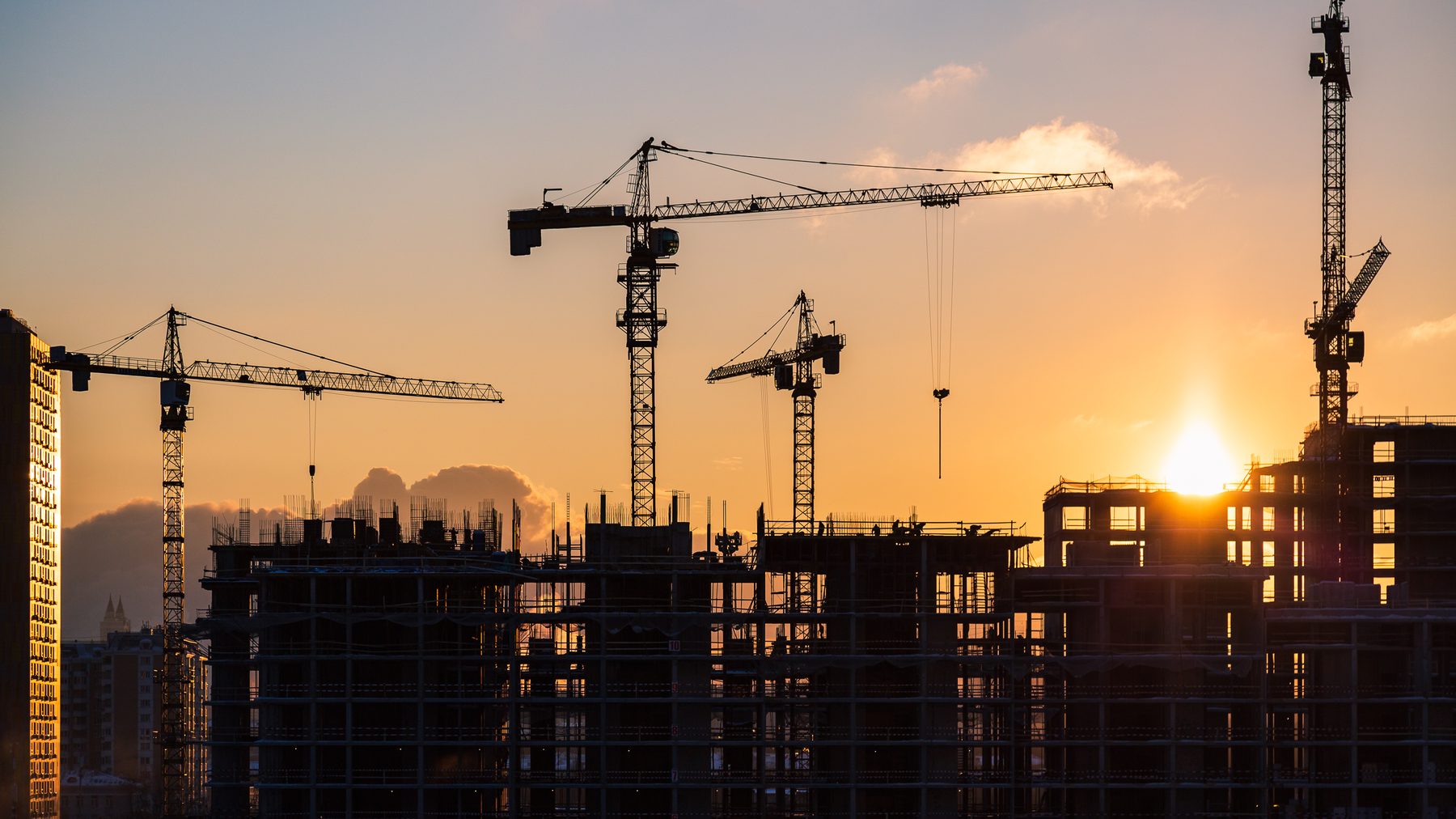
According to the UN Environment Programme's Global Status Report for Buildings and Construction, roughly half of the building stock the world will have in 2050 hasn't been built yet. In a market like the U.S., where new construction adds to an already mature base rather than replacing it wholesale, that global figure plays out differently, but the underlying point still holds for every project in your pipeline right now: energy efficient building design isn't a today problem. It's a decades problem, decided today, whether anyone in the room is thinking about it that way or not.
Half the buildings people will live in, work in, and rent from in 2050 are, right now, still just concepts being sketched, sites being underwritten, and permit sets being redlined. Every decision made in that design phase (envelope assembly, glazing ratio, mechanical system, controls strategy) gets locked in for the functional life of the asset. Nobody comes back in year eight to fix a poorly optimized wall assembly. It just sits there, costing money, for as long as the building stands.
The Decision Window Is Shorter Than the Consequence
Design happens over months. The consequences of design happen over decades. That mismatch is the core problem with treating energy performance as a box to check rather than a decision to get right.
A building's envelope (walls, roof, windows, air sealing) is essentially permanent once construction wraps. Mechanical systems get replaced on a cycle, but usually in kind, sized to the load the original envelope created. If that envelope was under-optimized at design, every subsequent HVAC replacement inherits the same inefficiency, generation after generation of equipment. The building doesn't get more efficient over time by default. It gets exactly as efficient as the day the crews walked off site, until someone spends real capital to change that.
This is true whether the building is a garden-style apartment complex, a mid-rise office, or a single-family subdivision. The scale differs. The mechanism doesn't. Whatever gets designed and built now is what tenants, owners, and operators are stuck operating for the next 30, 50, or more years, because major envelope and system decisions are, in practical terms, one-way doors.
Why "Good Enough for Code" Gets Expensive Later, Not Now
Meeting minimum code is the floor, not the target, and treating it as the target creates costs that show up on someone else's balance sheet years down the line, usually after the original design team has moved on to the next project.
A building designed to the bare minimum will cost its tenants more in utility bills for as long as it operates. That shows up directly in operating expenses, which shows up directly in net operating income, which is the number that determines what the asset is actually worth at sale or refinance. Underwriters and lenders increasingly build energy performance benchmarks into how they evaluate a property, and institutional and ESG-focused capital sources are getting more specific about what "efficient" actually means before they'll commit. A bare-minimum-code building doesn't clear that bar as easily as one designed with real headroom above it.
And once the building is occupied, fixing an underperforming envelope is a fundamentally different, and far more expensive, project than getting it right during design. Retrofit work on an occupied or already-built structure routinely carries a cost premium of 30 to 50 percent over what the same improvement would have cost as part of the original design and construction. You're not just paying for materials and labor a second time. You're paying a premium for working around an occupied building, undoing finished work to get at the assembly underneath, and often accepting a worse outcome than you could have designed in from the start, because you're now constrained by what already exists.
This isn't only a cost-avoidance story, either. Research from real estate and green-building researchers has repeatedly found that certified high-performance buildings tend to command rent and valuation premiums over comparable code-minimum stock, alongside lower vacancy and stronger tenant retention. A well-optimized building isn't just cheaper to operate: it's a more attractive asset to own, finance, and eventually sell, for exactly as long as it exists.
How Buildwiser Optimizes for the Building's Life, Not Just the Permit
Most energy modeling exists to answer one question: does this design meet code? That's a necessary question, but it's a narrow one: it tells you whether a design clears the floor, not whether it's the right long-term decision for the asset.
Buildwiser AI answers a broader question at every stage of design: given this project's constraints, what's the most cost-effective path to strong energy performance, not just the minimum required to pass? The platform runs simulations across design alternatives in minutes rather than the weeks a traditional consultant engagement takes, which means envelope and systems decisions can actually be tested and compared while they're still cheap to change, instead of being locked in before anyone ran the numbers.
That distinction matters because the cheapest compliant path and the cheapest lifetime path are not always the same design. A slightly higher-performance envelope spec might add a modest amount to construction cost while cutting operating costs for the building's entire useful life, and (as covered in Buildwiser's coverage of federal incentive programs) sometimes qualifying the project for incentive value that offsets some or all of that upfront difference. Buildwiser surfaces that comparison directly, across any building type and any U.S. jurisdiction, so the decision gets made with real numbers in front of it, at the one point in the project where changing course is still inexpensive.
Half of the buildings that will exist by 2050 are being designed right now, somewhere, by someone. The ones designed with real optimization instead of a bare-minimum compliance check are the ones that will still be performing well, and worth more, decades from now.
Frequently Asked Questions
What does "energy efficient building design" actually mean beyond meeting code?
Meeting code establishes a minimum performance floor for a given jurisdiction and building type. Energy efficient building design, in the fuller sense, means optimizing envelope, systems, and controls decisions to perform meaningfully better than that floor, because those decisions are effectively permanent once construction is complete.
Why does design-stage performance matter more than what happens after construction?
Because major performance-determining elements, the building envelope in particular, are far cheaper to get right during design than to fix afterward. Retrofit work on an existing or occupied building typically carries a 30 to 50 percent cost premium over addressing the same issue at the design stage, and disrupts operations or tenants in the process.
Does building envelope optimization actually affect property value?
Yes, indirectly but materially. Lower energy costs improve net operating income, and lenders and institutional capital sources increasingly factor energy performance into underwriting and refinancing decisions. A building performing well above code minimum is generally in a stronger position on both fronts than one built to the bare floor.
How can a developer optimize energy performance without blowing up the design timeline?
The traditional path (a separate optimization study layered on top of a compliance model) adds time most schedules don't have. An AI-driven platform that runs performance comparisons across design alternatives in minutes, rather than weeks, lets that optimization happen inside the existing design schedule instead of extending it.
See What Your Project Qualifies For
The design decisions in front of you right now are the ones this asset will be stuck with for decades. See what a genuinely optimized path looks like before you lock anything in.